

Blog
Why Vertigo Feels Worse for Solo Queue Than for Five-Stacks

Load into Vertigo in solo queue and you can feel the mood instantly: one guy wants to rush A ramp with a Galil, another is spamming B from spawn, and someone else is already typing because you didn’t drop him an AK on round 2. Same map, same CS2 subtick, completely different experience depending on whether you queued alone or with a full stack. Vertigo isn’t just “a team map.” It’s a map that punishes randoms for not having the same brain cell, and rewards five-stacks for looking like they’ve got a real stratbook.
That gap has always existed in Counter-Strike, but Vertigo makes it feel uglier than Mirage or Inferno. On Vertigo, one missed call can snowball into a round where you’re stuck fighting through narrow chokepoints, bad spacing, and a lobby/A ramp split that turns into a 2v5 in about eight seconds. If you’ve ever grinded Premier solo and wondered why your win rate on Vertigo feels cursed, yeah — there’s a reason.
Vertigo doesn’t forgive random decision-making
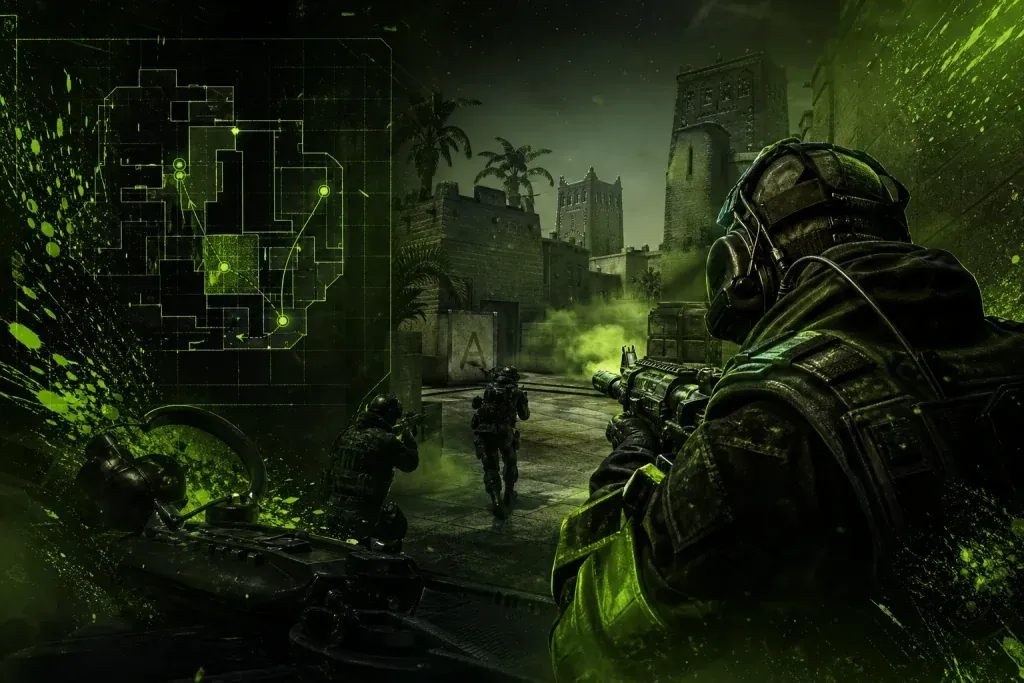
The map is built around tight information fights. A ramp, B stairs, mid, heaven, sandwich — there’s very little room to roam around and “figure it out” the way you can on Ancient or Overpass. In solo queue, that matters a ton because most players aren’t actually coordinating. They’re reacting. That’s a huge difference.
When you’re queued with four strangers, half the round is spent trying to guess who’s making the call. Do you default? Do you hit B? Do you keep an anti-flash? Nobody really knows, so the team ends up doing the Counter-Strike version of five people checking their phone at the same time. Vertigo eats that up.
Five-stacks, on the other hand, can make a mediocre plan look clean. They can send one guy to fake A ramp presence, have two lurk ladder, and actually time a B pop with utility so the defense rotates into a mess. That’s not genius. It’s just structure, and structure is everything on this map.
Solo queue hates maps with narrow jobs
Vertigo asks players to play specific jobs more than people want to admit. The A ramp player has to know when to eat utility, when to take space, and when to stop being a hero. B players need patience because a bad peek on the site floor turns into a free rifle for CTs. Mid players need to understand whether they’re a pressure piece or a full commit piece. In solo queue, people don’t naturally lock into those roles.
That’s where the misery comes from. On Mirage, if your teammate plays badly connector, you can still brute-force A through ramp or explode B with a quick exec. On Vertigo, one broken piece often kills the whole round because the map is so vertically boxed in. You’re not just losing a player — you’re losing the whole timing window.
The economy gets weird fast
Vertigo also exposes bad money decisions way harder than most maps. A lot of solo queue players buy because they feel poor, not because the round economy actually says they should. Then round 3 turns into a broken half-buy disaster, and suddenly you’re playing against full AKs while your team is split between Deagles, a FAMAS, and some heroic guy who forced a smoke kit on 1,900.
That’s brutal on Vertigo because the defense can convert small advantages into full control. If CTs win the first gun round and keep three rifles alive, the T side often has to play catch-up with 2,250-style half buys or ugly 1,400 save rounds. In five-stacks, people usually understand when to full eco, when to force with 2,900-ish loss bonus pressure, and when to wait for the real buy. Solo queue? Good luck. Someone’s always typing “we need to buy” while the bank says otherwise.
- Bad eco timing
- Half-buy chaos
- Three people flashing the same choke
- No one saving the AWP
- Someone dry peeking from sandwich like it’s FACEIT level 5 in 2020
Five-stacks can make Vertigo look fairer than it is
This is the part people miss when they complain about the map itself. Vertigo isn’t only strong for coordinated teams because the site hits are good. It’s strong because the whole map rewards repeatable habits. If your stack knows the default A ramp pressure, knows when to throw the anti-HE, knows how to swing off the flash from stairs, and knows what the second contact should be, you’ve already gained more than half the battle.
Look at how pro teams handle it in big events. At a Major-level pace, Vertigo often becomes a map of tiny timing edges rather than raw aim duels, and that’s why teams with excellent mid-round calling can make it look easy. You’ve seen it from squads that prep hard for a tournament run — the site hits are layered, the utility is measured, and nobody’s just sprinting in because they feel “hot.” When donk or m0NESY gets value on Vertigo, it’s usually inside a system, not as a solo queue hero moment.
That’s the part casual players don’t get: a five-stack can turn a “bad map” into a controlled map because they’re playing the same game. Solo queue is often five different games happening at once.
CT side is a comm test, not a mechanics test
On paper, CT Vertigo should be fine. You’ve got elevation, you’ve got early ramp control, you’ve got a lot of one-and-done angles if you want to be annoying. But the side lives and dies by information sharing. If one player sees a ramp rush and doesn’t call it instantly, or if someone hears utility but assumes it’s a fake, the whole defense falls apart. The round can be lost before the first rotation even lands.
This is why solo queue CTs on Vertigo feel miserable. People don’t want to anchor properly. They want to peek. They want to chase. They want to “help” on the other bombsite after hearing one flash. That’s how you end up giving up A ramp, then losing B to a late hit because nobody was actually holding the cross. It’s not just bad aim — it’s bad discipline.
Subtick didn’t fix the thing Vertigo exposes
CS2’s subtick system changed how shooting feels, but it didn’t magically make Vertigo easier for random teams to play. If anything, the map still rewards rehearsed spacing and utility timing more than raw input feel. A perfectly timed jump peek or a flash pop through A ramp still matters, but so does knowing your teammate will swing when you swing, not three seconds later after he’s finished checking his settings.
That’s why the map can feel strangely old-school despite being in Source 2. The mechanics are modern; the teamwork requirement is ancient. When a five-stack has real chemistry, subtick makes the contact cleaner. When solo queue is a mess, subtick just makes the mess happen at higher frame clarity.
Why people keep banning it anyway
Vertigo gets banned in solo queue because players don’t trust randoms to handle the basics, and honestly, they’re not wrong. A lot of people would rather queue Dust2 and take a million dry mid duels than spend 25 rounds begging three strangers to stop overrotating. Vertigo asks for discipline, and solo queue rarely gives that back.
Five-stacks love it for the exact same reason. It’s predictable enough to prep, volatile enough to punish lazy opponents, and nasty enough that even a slightly organized team can farm momentum. If you’ve got a stack that knows its nades, tracks money, and doesn’t panic after losing the pistol, Vertigo becomes one of those maps where the enemy looks lost from round 4 onward.
So yeah, the map itself isn’t broken. Solo queue just strips away the one thing Vertigo needs most: trust. And if your team can’t even agree on who’s smoking ramp, what exactly are you expecting when the round hits 1:15 and the B hit starts coming?