


Blog
3 Mid-Round Calls That Separate Smart Teams From Panic Queues

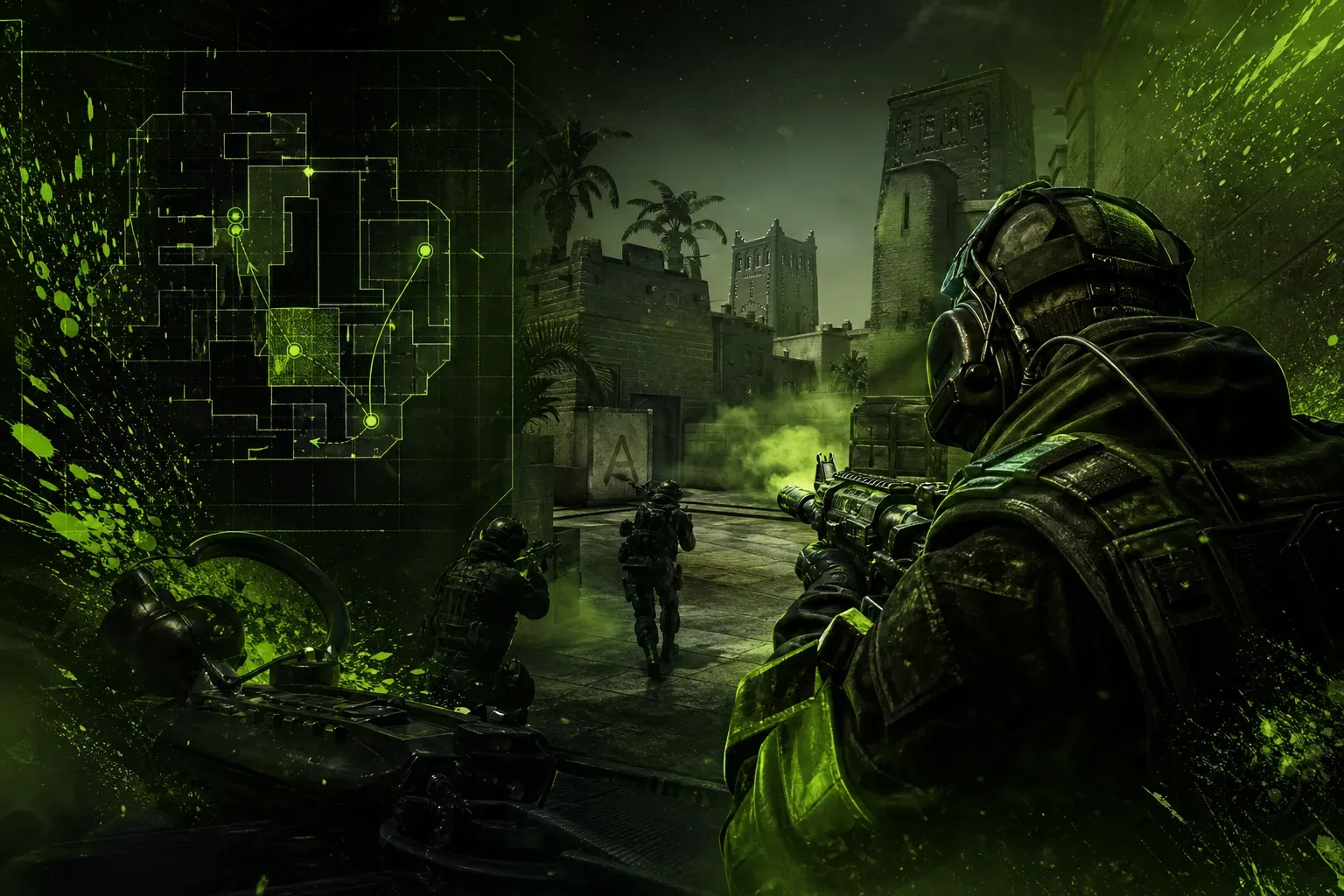
Round 18 on Mirage. Your team has 2 riflers on 65 HP, the bomb’s still in T spawn, and the guy calling is already yelling for a B split that was dead 20 seconds ago. That’s the difference between a smart CS2 team and a panic queue: one side makes the round smaller, the other side keeps trying to solve everything at once.
CS2’s subtick system changed the feel of peeking and trading, but it didn’t change the part that wins games. Mid-round calling still decides who gets the clean 2v2, who forces the CTs to rotate too early, and who ends up dry-running into a stack because nobody wanted to say, “Stop. Reset.”
The best teams don’t “make a play” — they make the round easier
That’s the first thing bad stacks get wrong. They think a good mid-round call has to be flashy. It doesn’t. The best calls are usually ugly, practical, and a little boring. They’re the kind that turn a messy 40-second scramble into a clean 20-second hit.
If you watched donk at the Shanghai Major or m0NESY taking over late-round space on Inferno, you’ve seen this in real time. Nobody’s asking for magic every round. They’re asking for one solid decision that removes options from the other side.
Smart teams ask a few very unglamorous questions:
- Where is the CT economy weak?
- What utility did they already spend?
- Who’s likely isolated?
- Can we force a rotation without showing the full hit?
That’s it. Not “let’s hero play.” Not “go B because vibe.” If your caller is constantly trying to improvise a full-page novel every round, the team gets slower, louder, and worse.
Call 1: Stop the rotation bait and hit the hole they leave behind
This is the cleanest mid-round call in CS2, and honestly one of the most underused in Premier. You show presence on one side of the map, force the CT anchor to call for help, then pivot the moment the rotation is committed. It works on Mirage, Ancient, Dust2, pretty much anywhere CTs are stretched thin.
On Mirage, this often looks like a 2-1-2 default that turns into an A hit through Connector and Ramp after making the B player smoke or rotate. On Inferno, it’s that fake Banana pressure that pulls a support player off Arch, then suddenly you’re flooding Top Mid to split A. The whole idea is simple: make the defense spend a body, then punish the new gap.
The mistake panic queues make is timing. They show too much, too early. The CTs don’t bite, and now your team is just five guys standing around Tetris waiting for something to happen. Real teams treat the fake like a knife, not a firework.
Strong calls sound like this: “One more piece of utility, then we leave.” Or: “They’ve got three here already. Don’t fight it. Walk mid and hit the space they just gave us.”
That’s smart Counter-Strike. You’re not outaiming the defense. You’re making them wrong first.
Call 2: Freeze the round for five seconds when everything feels messy
This is the call most average teams are too scared to make, because it sounds like doing nothing. It isn’t. It’s a reset. And in CS2, where the subtick system makes duels feel faster and more immediate, rushing into a bad fight gets punished hard.
Say you’ve got 38 seconds left on Nuke, two players outside, one secret, and the bomb’s still in Lobby. Half the queue wants to force something right now. Bad idea. Good callers will literally stop the team for five to eight seconds, clear comms, and rebuild the round from the info they already own.
That tiny pause does a few things:
- CT utility gets burned out of panic.
- Your lurker can catch a rotating player out of position.
- The defense loses its clean read and starts over-rotating.
It’s the sort of call ZywOo’s teams have always been good at making — not because they’re passive, but because they know when the map is lying to them. If you’ve got a man advantage and 35 seconds, there’s no rule saying you need to sprint into a stacked site like it’s matchmaking at 2 a.m.
One more thing: this call gets better when your team actually counts the clock. Not “we’ve got time,” but 42, 36, 28. Real numbers. Real pressure. A lot of rounds are lost because nobody says the obvious stuff out loud.
Call 3: Spend the round on information, not ego
This one separates the teams that have a plan from the ones that just have loud comms. Sometimes the best mid-round call is to spend 10 seconds and 300 dollars of utility to confirm exactly where the defense is. That’s cheap compared to throwing away a 5v4 because someone wanted to “feel out” B site alone.
On Anubis, for example, a single smoke, flash, and shoulder peek around Water or Connector can tell you whether the CTs are leaning A or playing deep. On Overpass, a bit of pressure at Bathrooms can force a response that opens up short control. On Train, if that ever comes back in full force, it’s the same old story: vision, lanes, and whether the CTs are respecting Ivy or just gambling a stack.
Here’s the key: information calls only work if the team actually listens to the answer. Too many groups get the read, then ignore it because somebody wants to top-frag. That’s not aggression. That’s self-sabotage with a headset on.
A good mid-round info call usually sounds like:
- “I got nothing B, they’re probably stacked A.”
- “One utility used in Karrigan spot — hold that space.”
- “They’re giving us lower. Take it and don’t peek.”
That last one matters more than people think. If you win map control, don’t immediately throw it away. So many teams on Premier ladders get control, then peek the same angle three times because they’re bored. That’s how you go from comfortable to dead in six seconds.
What panic queues always get wrong
Panic teams don’t actually lack aim. They lack sequence. Their rounds look like a bunch of individual decisions stacked on top of each other, which is why they feel chaotic even when the score is close.
The bad habits are always the same:
- Calling five different things in one round.
- Taking space without counting the clock.
- Using every flash before the entry path is even decided.
- Over-rotating on one fake and leaving the other site naked.
That’s how you get the classic 11-11 collapse in Premier, where everyone’s rating starts looking expensive and nobody remembers who called the dry walk through a smoke. Smart teams are calmer because they’re simpler. One caller. One idea. One fallback if the first read is wrong.
And no, this isn’t some boring pro-team fantasy. Watch any deep Major run and you’ll see it. The best teams don’t win because they have more ideas. They win because they finish rounds with fewer bad ones.
If you want cleaner rounds, start here
You don’t need a new system. You need fewer words and better timing. Call the fake when it matters. Freeze the round when it gets messy. Spend utility to get proof, not vibes.
Do that consistently and your team starts looking different fast. Not because you suddenly became donk or s1mple, but because your rounds stop bleeding value every 15 seconds.
The real question is simple: when the round turns ugly, does your team make it smaller — or do you all just start talking louder?